
Project facts
- Capacity
- 6.55 MWp
- Commercial operation
- 2025
- Delivery model
- EPC (subcontract)
- Counterparty role
- EPC partner to Ditrolic
- Sector
- Manufacturing
- Island group
- Luzon
Masterfile 2026-SUB-00156, confirmed by Karl 22 Aug 2026 as the authoritative figure (supersedes the 6.0 MWp figure in the Aug 2026 Market Position Report).
The client is not named here: the publicity position for this contract has not been confirmed.
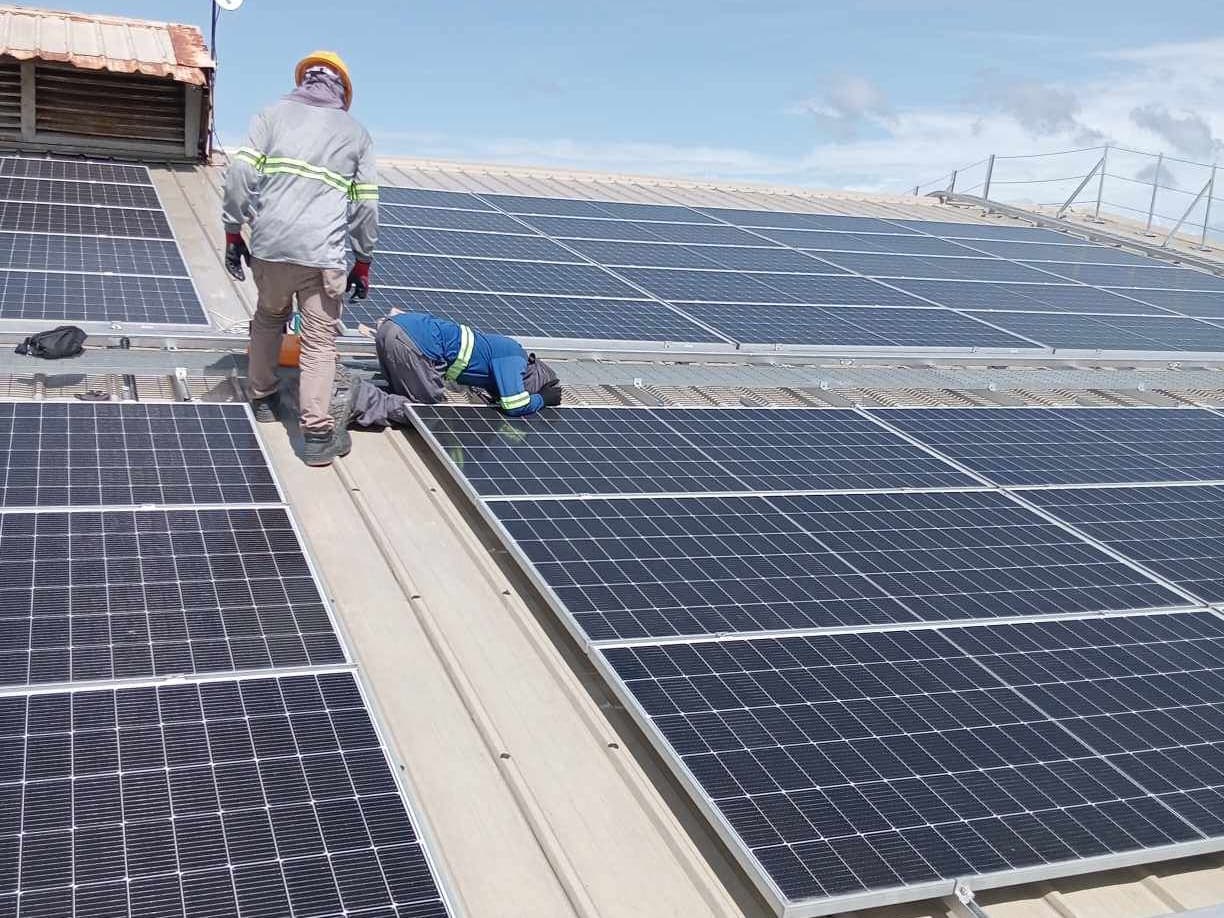
At 6.55 MWp, the Naic array is the largest single system Magnus has delivered. It sits on a manufacturing facility in Cavite and was built as the EPC contractor to an international commercial and industrial solar developer, which financed and holds the asset. The capacity figure here is the Project Onboarding Masterfile value of 6,553.8 kWp, confirmed as authoritative in August 2026; an earlier internal market report carried a rounded 6.0 MWp, which this supersedes.
A roof of this size is a structural problem before it is an electrical one. Every array Magnus designs begins with a roof structural review, a shading analysis and a load-profile study, and the attachment design is engineered to the building rather than adapted from a catalogue. On a live manufacturing site, the construction sequence also has to respect production: work is staged around operations, and the shutdown required for grid tie-in is coordinated with the plant’s own maintenance calendar.
Projects like this are why Magnus does not appear in published Philippine solar league tables at the scale its delivered capacity would suggest. The developer of record is credited with the megawatts; the engineering, procurement and construction were ours. We are comfortable with that commercially, and we publish the record here so that it is at least discoverable.
Talk to an engineer, not a salesperson.
Send us your address and a recent electricity bill. We’ll come back with a preliminary design and an indicative proposal.